

GEG Verification for a New Industrial and Non-Residential Building
Energy performance verification under the German Building Energy Act for a new-build project in the chemical industryFor a new-build project in an industrial environment, INOPCO prepared the complete energy performance verification under the German Building Energy Act. The building was assessed as a non-residential building and evaluated according to the requirements for new non-residential buildings.
The focus was on GEG-compliant calculation of the annual primary energy demand, technically correct zoning of different usage areas, definition of suitable user profiles and recording of reliable building data. The calculation was carried out on the basis of DIN V 18599 and took into account the project-specific energy supply concept of the industrial facility.
The verification was not merely the computational conclusion of the planning process, but an integral part of design and approval planning. Especially for industrial and production buildings, architecture, building services, process planning, usage concept and energy calculation must be coordinated at an early stage so that the planned new building meets the statutory requirements and approval capability is secured.
Request GEG VerificationProject Profile
- GEG verification for a new non-residential building
- Industrial building in chemical production
- Calculation of annual primary energy demand according to DIN V 18599
- Zoning of complex industrial usage areas
- Project-specific primary energy factor for electricity
Legal Basis of the Verification
The energy performance verification was prepared for a new non-residential building. The relevant basis included the scope of the German Building Energy Act, the requirements for new non-residential buildings, the calculation method according to DIN V 18599 and the zone-based consideration of energy demand shares.
Section 2 GEG: Scope
Classification of the new-build project as a building with energy-related requirements for the building envelope and technical systems.
Section 18 GEG: Total Energy Demand
Verification of the permissible annual primary energy demand for a new non-residential building in relation to the reference building.
Section 21 GEG: Calculation
Calculation of the annual primary energy demand for non-residential buildings on the basis of DIN V 18599.
Section 30 GEG: Zoning
Zone-based consideration of energy demand shares for a new non-residential building.
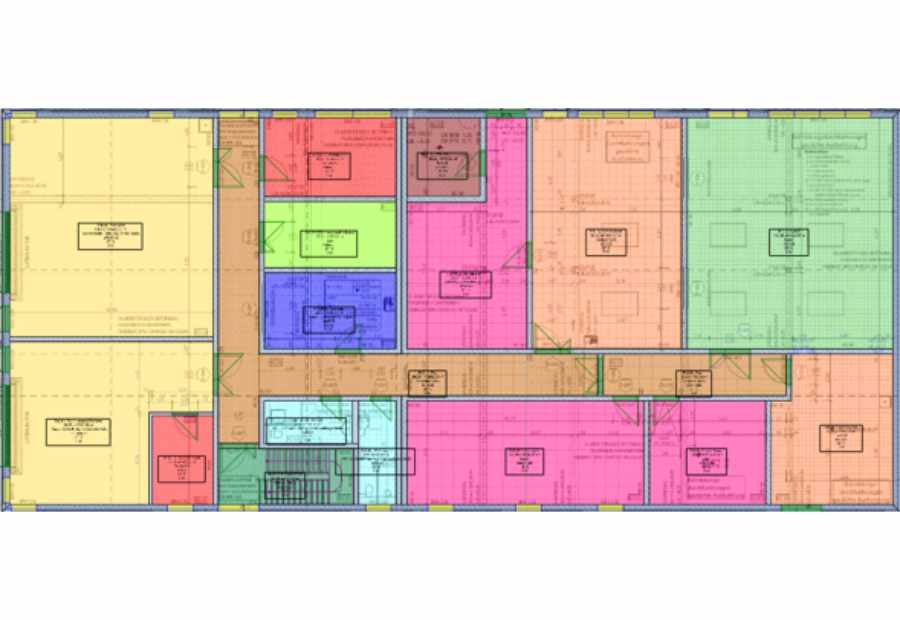
Zoning as the Technical Basis of GEG Verification
In industrial buildings, correct usage assignment determines the reliability of the energy calculationAs the project involved a non-residential building with different industrial usage areas, the building was divided into zones for the energy calculation. This was based on the methodology of DIN V 18599 in conjunction with the provisions of the GEG for calculation and zone-based consideration of energy demand shares.
The zoning had to consistently represent floor plan, room functions, usage times, temperature requirements, ventilation, lighting, internal loads and technical supply systems. This is particularly demanding in an industrial building because production-related areas, technical rooms, storage areas, circulation areas as well as office or social areas have different energy effects.
Technical Challenge
GEG verification is created at the interface of several specialist planning disciplines. For a robust verification, design, usage, building envelope, technical systems, energy supply and approval requirements must be brought together.
Zoning and Usage
Coordination of floor plan, room functions, usage times, temperature requirements and energy assignment.
User Profiles
Adaptation of profiles to industrial uses where standard assumptions do not sufficiently represent actual usage.
Building Data
Recording of envelope areas, components, geometries, floor area references, zones and energy-relevant properties.
Energy Supply
Consideration of the project-specific supply concept and a reduced primary energy factor for electricity.
Adapted User Profiles for Industrial Use
The verification must match the real use of the planned buildingIn non-residential industrial buildings, general standard assumptions are often not sufficient. Production-related ancillary areas, laboratory or technical areas, administrative areas, social rooms and circulation areas can have very different usage conditions.
For the GEG verification, the user profiles were therefore technically reviewed and adapted to the project-specific use. This work is particularly important because user profiles directly influence lighting, ventilation, internal loads, operating hours and energy demand.
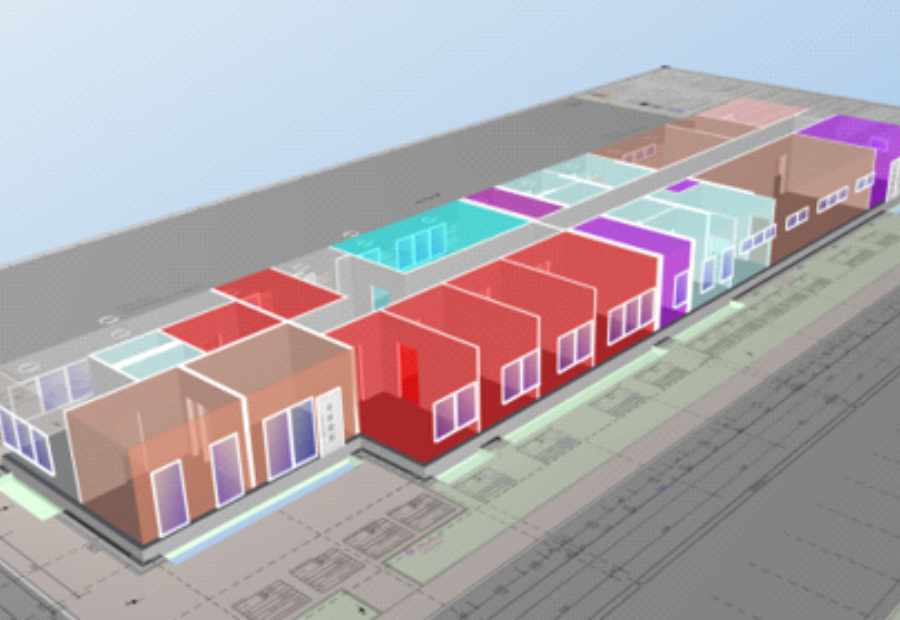
1. Design Planning
The verification should start as soon as floor plan, building volume, usage, thermal envelope and key component qualities are sufficiently reliable.
2. Specialist Coordination
Architecture, building services, building physics, process planning, fire protection, structural engineering and the client must jointly clarify energy-relevant boundary conditions.
3. Energy Calculation
Based on the coordinated data, the calculation is carried out according to DIN V 18599 with zoning model, user profiles, technical systems and primary energy factors.
4. Documentation
The completed GEG verification or energy performance certificate is prepared as part of the project and approval documentation.
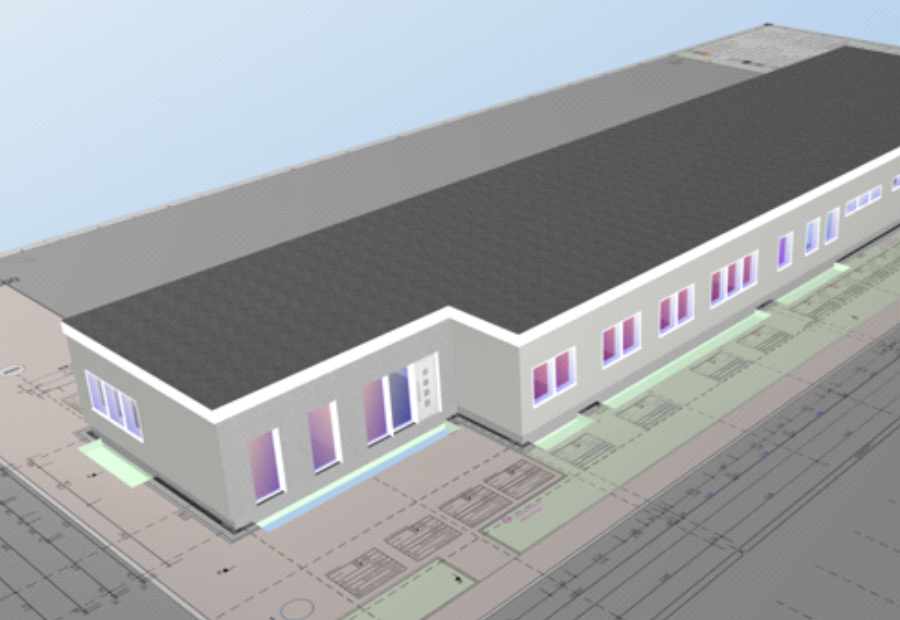
Specific Feature in the Planning Process
GEG verification is not an isolated calculation product, but part of design and approval planningEnergy performance verification must begin at a point in time when the design can still be influenced. If the building envelope, room programme, technical systems or energy supply have already been finally fixed, necessary adjustments can only be integrated with significant effort.
For industrial buildings, production-related requirements are often shaped by process planning, the operator, process media, ventilation, waste heat, internal loads and safety requirements. This information must be incorporated into the GEG verification in good time so that the calculated building corresponds to the planned building.
Communication between design planning, building services planning, building physics, approval planning, process planning and the client is therefore a key success factor. Only when usages, zones, envelope areas, technical systems and energy supply are consistently coordinated can the energy performance verification be prepared on a reliable basis.
Result
The GEG verification was prepared as a reliable part of the approval and project documentation.
- Complete energy performance verification for a new non-residential building under the GEG
- Zoning of complex industrial usage areas
- Adapted user profiles and coordinated building data
- Calculation of annual primary energy demand according to DIN V 18599
- Consideration of the project-specific energy supply concept