

BImSchG Planning for Industrial Facilities in Germany
feasibility, procedure strategy, authority pre-meetings and permit-ready documents for installations requiring approvalINOPCO supports operators, investors and project teams in preparing and coordinating BImSchG procedures for production plants, process plants, plant modifications and industrial expansions in Germany. The focus is on a robust approval strategy, clear interface management and technically traceable application documents.
BImSchG planning is an iterative process: installation boundaries, handled substances, operating times, process flow diagrams, emission sources, ancillary facilities, expert assessments, building design and specialist authority requirements must be aligned until application, technical planning and approval capability fit together.
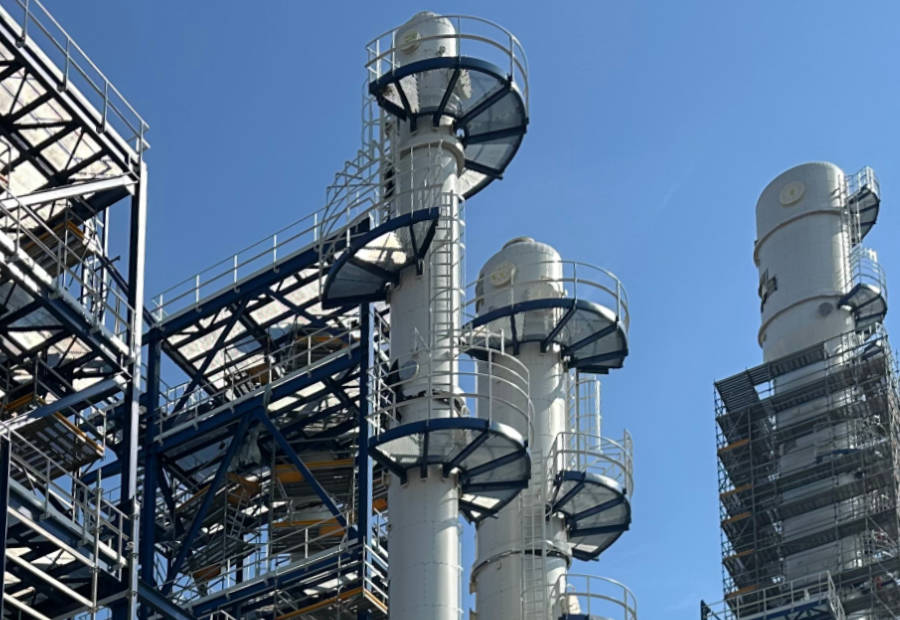
Direct Answer
BImSchG planning clarifies whether an installation requires approval in Germany, which procedure applies and which technical documents, expert assessments and authority coordination are needed for an approvable application.
For whom?
For operators of industrial, chemical, production, energy, storage and process facilities as well as companies planning new installations, modifications or capacity expansions in Germany.
Result
Procedure strategy, briefing paper, coordinated expert scope, substance and process description, process flow diagram logic, permit documents and authority communication.
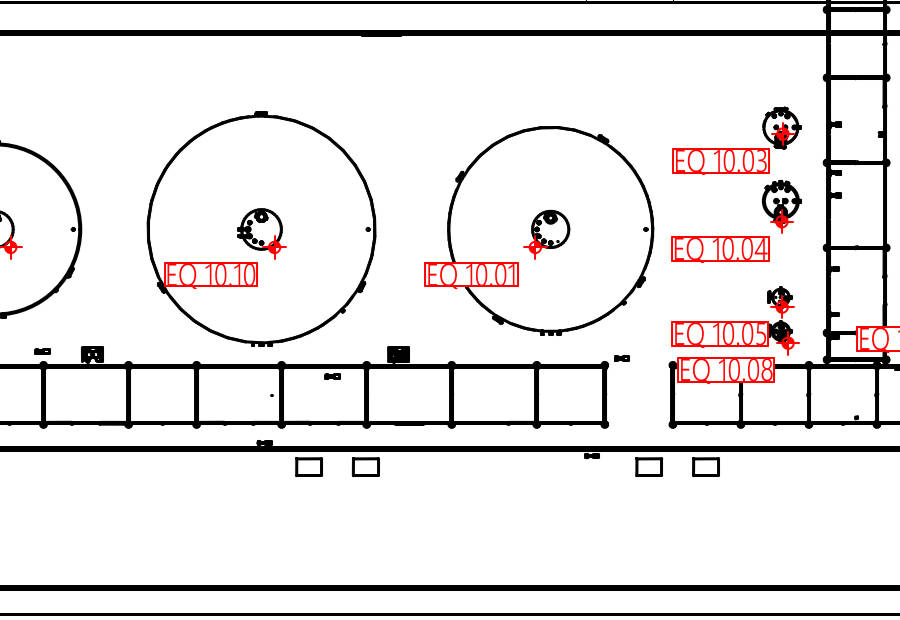
Specifics of BImSchG, 4th BImSchV and 9th BImSchV
clarify approval requirement, procedure type and document scope earlyThe 4th BImSchV determines which installations require approval and which procedure type applies. Relevant factors include installation type, capacity, installation size, legally and factually possible operating scope, common installations and expansions.
The 9th BImSchV regulates the approval procedure, application, documents, consultation by the approval authority, public participation, involvement of other authorities and additional requirements such as environmental impact assessment information or major-accident relevance.
- classification under Annex 1 of the 4th BImSchV and review of capacity thresholds
- definition of main installation, ancillary facilities and common installation
- clarification of simplified or formal procedure, public participation and EIA links
- document structure under the 9th BImSchV including expert assessments and specialist authorities
Scope of BImSchG Planning
from feasibility to permit-ready application structureFeasibility
Early assessment of site, installation concept, capacity, substances, emission pathways, neighbourhood, water-law interfaces, building law and approval risks.
4th BImSchV Classification
Classification of installation type, capacity thresholds, common installation, ancillary facilities, expansions and procedure type.
Process and Substance Alignment
Iterative alignment of substance lists, safety data, process flow diagrams, operating modes, emission sources, exhaust air, wastewater, waste and ancillary facilities.
Expert Coordination
Coordination of external experts for noise, immission, air, dust, odour, fire protection, explosion protection, major-accident law, traffic and water law.
Briefing Paper
Structured documents for authority pre-meetings with project description, installation boundaries, substances, emission pathways and clarification questions.
Application Coordination
Integration of building design, plant design, expert assessments, specialist authority input and operator information into an auditable application structure.
Typical Iterative Procedure
BImSchG applications emerge through loops of technology, substance data, expert assessments and authority coordination1. Assess plant concept and site
Project, existing structures, neighbourhood, planning-law situation, utilities, traffic, water interfaces and possible approval obstacles are classified.
2. Classify under 4th BImSchV
Installation type, capacity thresholds, expansions, common installations, ancillary facilities, procedure type and possible EIA links are reviewed.
3. Consolidate substances and diagrams
Raw materials, auxiliary substances, intermediates, products, waste, water, exhaust air, wastewater, energy and operating states are aligned with process flow diagrams.
4. Define emission sources
Sources for noise, air pollutants, dust, odour, exhaust air, wastewater, waste, traffic and diffuse emissions are identified and assessed.
5. Derive expert scope
Noise, immission, dust, odour, fire protection, explosion protection, major-accident, water-law and traffic topics are assigned to expert workstreams.
6. Prepare authority meeting
A briefing paper bundles project, installation boundaries, substances, process flow diagrams, emission pathways, procedure, expert assessments and specific questions.
7. Iterate planning
Expert results, authority feedback and technical changes feed back into plant layout, building design, exhaust air routing, substance storage and document structure.
8. Compile application
Application forms, technical descriptions, plans, expert assessments, substance data, operating descriptions, protection concepts and specialist input are coordinated.
9. Respond to authority requests
Authority questions are technically assessed, coordinated with operator and experts and translated into revised documents.
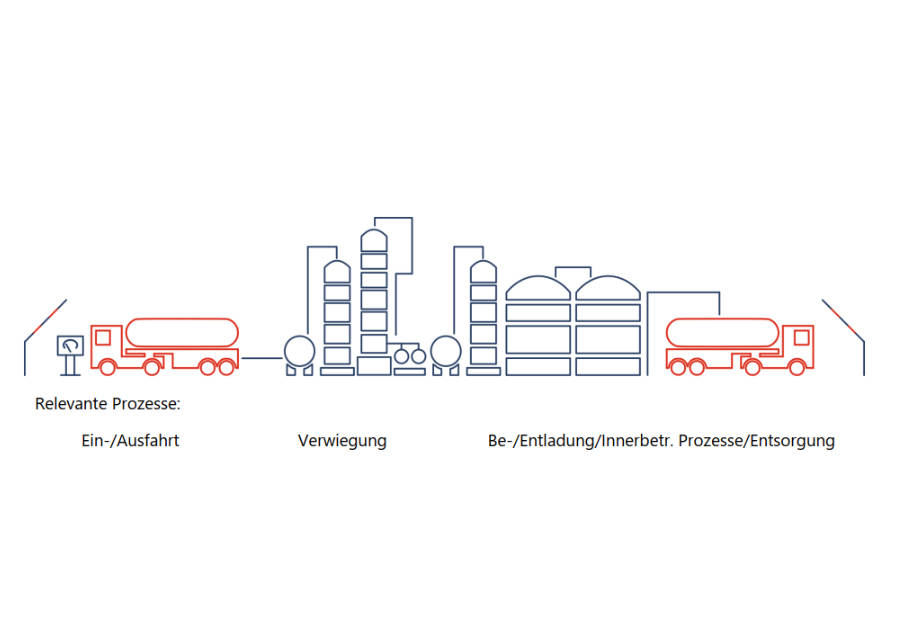
Briefing Papers for Authority Pre-Meetings
clear decision basis for approval authority, specialist authorities and project teamBefore a formal application, an authority pre-meeting is often the most efficient way to clarify open questions on procedure type, application scope, expert needs, water law, building permit, EIA, major-accident relevance, substances and emission pathways.
INOPCO prepares structured briefing papers that are not overloaded but contain all decision-relevant information. The aim is a robust basis for approval strategy, schedule and expert commissioning.
- project description with installation purpose, capacity and operating mode
- installation boundaries, ancillary facilities and planned modifications
- substance lists, quantity structures, safety data and substance groups handled
- process flow diagrams, emission sources, exhaust air, wastewater, waste and traffic
- specific clarification questions for approval and specialist authorities
Interfaces with Authorities and Experts
BImSchG procedures require technical coordination across several levelsAuthorities and Specialist Authorities
Depending on federal state and project, several authorities may be involved, for example approval authority, state administration authority, trade supervisory authority, immission-control authority, lower or higher water authority, building authority, fire protection department, nature conservation, occupational safety or waste authority.
- consider state-specific responsibilities and authority structures
- clarify interfaces with water law, building law and immission control
- integrate specialist-authority questions early into approval strategy and schedule
External Experts
Typical expert contributions concern noise, air pollutants, dust, odour, waste heat, fire protection, explosion protection, major-accident law, baseline report, water law, wastewater, AwSV/WHG, geotechnics, traffic, nature conservation or environmental impact assessment.
- derive expert scope from substances, process flow diagrams and emission sources
- define expert parameters consistently with plant design at an early stage
- feed results back into building design, application documents and authority communication
Relevant References
BImSchG interfaces, building permit applications and industrial planning in practice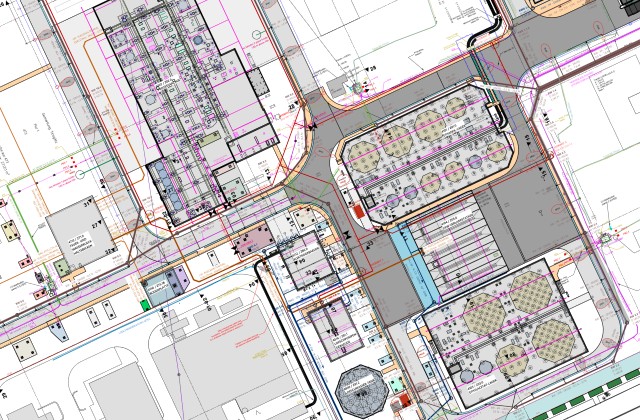
BImSchG New Production Facility
Building and approval planning for the new construction of a production facility with architecture, structural engineering and execution planning.
View Reference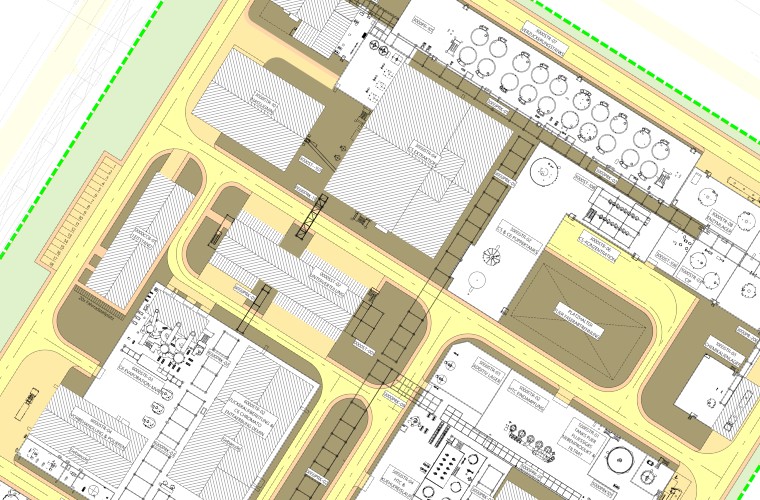
Biorefinery Saxony-Anhalt
Building permit application, authority management, execution planning, structural engineering, MEP and building design for a large industrial project.
View Reference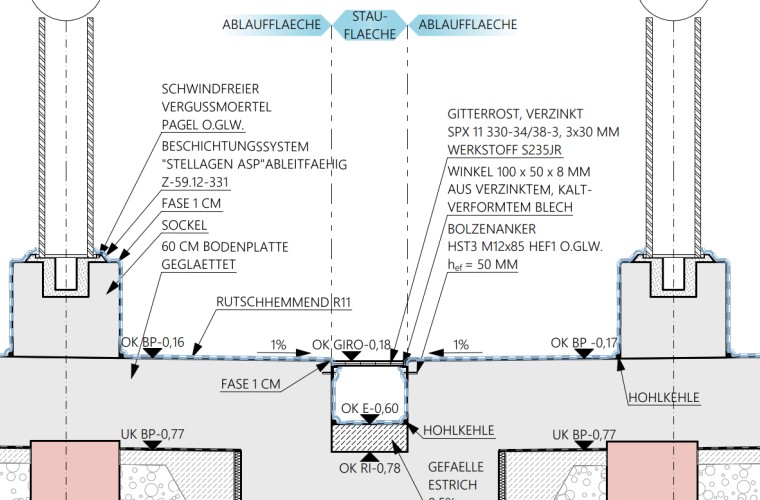
AwSV / WHG Tank Farm
Planning and documentation for installations handling substances hazardous to water as a typical interface with BImSchG and specialist authority procedures.
View Reference